
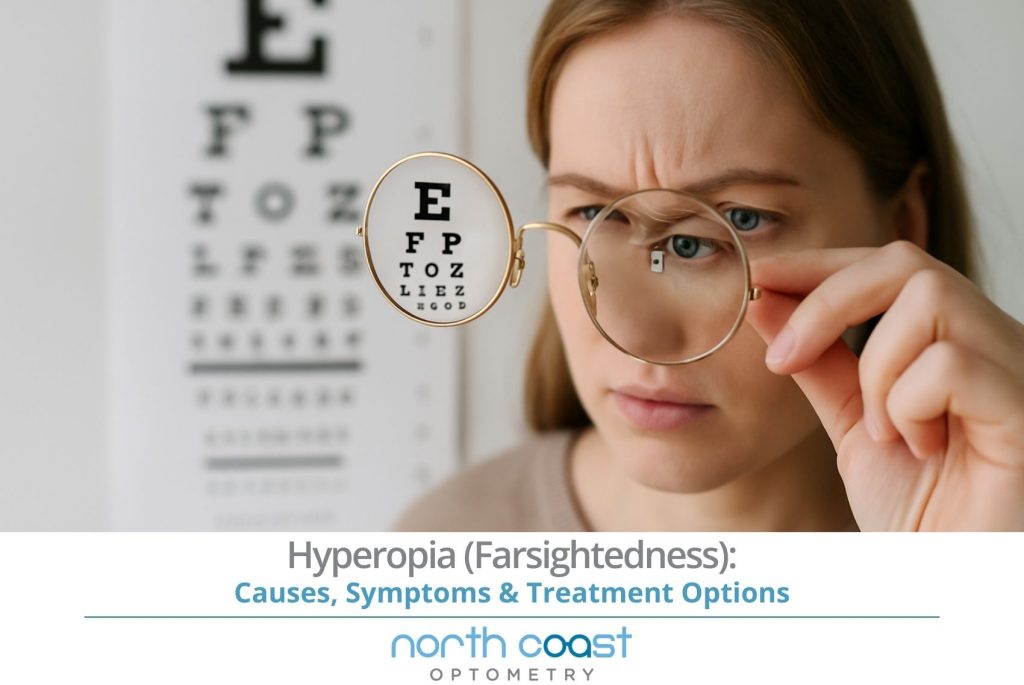
Hyperopia—commonly known as farsightedness—is one of the most common refractive errors, yet many people don’t realize they have it until it begins to affect their daily life. At North Coast Optometry, we believe that understanding your vision is the first step toward long-term eye health. Whether you’re experiencing symptoms or seeking clarity, this guide covers everything you need to know about hyperopia.
What Is Hyperopia?
Hyperopia occurs when light entering the eye focuses behind the retina rather than directly on it. This typically happens because the eye is shorter than normal or the cornea has too little curvature.
How This Affects Vision
- Near objects appear blurry
- Distance vision is clearer (though moderate-to-severe hyperopia may affect distance vision as well)
- Eyes may feel strained during reading, screen use, or close-up tasks
Hyperopia can affect people of all ages—including children—and may go undetected without a comprehensive eye exam.
Common Symptoms of Hyperopia
Some individuals may not notice symptoms, while others may experience:
- Blurry vision during close work
- Difficulty concentrating on reading or phone screens
- Eye strain or fatigue
- Frequent headaches
- Squinting to see clearly
- Burning or aching around the eyes
If these symptoms sound familiar, it may be time for a professional eye exam.
What Causes Hyperopia?
The most common cause of hyperopia is heredity. You are more likely to develop farsightedness if your parents or siblings have it. Other contributing factors include:
- A shorter-than-average eyeball
- A flatter cornea
- Age-related changes in the eye’s focusing ability
Even adults who have never worn glasses may develop or notice worsening farsightedness over time.
How Hyperopia Is Diagnosed
At North Coast Optometry, we use advanced diagnostic technology to provide accurate evaluations and personalized care. A full eye exam may include:
- Visual acuity testing
- Refraction assessment to determine prescription
- Slit-lamp examination
- Retinal evaluation
- Pediatric eye exams for children
Routine exams ensure early detection and proper treatment.
Treatment Options for Hyperopia
Prescription Eyeglasses
A simple, effective solution for most patients. Modern lenses offer comfort, clarity, and optional protective coatings.
Contact Lenses
Ideal for those who prefer an alternative to glasses. Options include:
- Soft contact lenses
- Daily disposables
- Multifocal contact lenses
Our team can help determine which option best fits your lifestyle.
Refractive Surgery
Procedures such as LASIK or PRK may permanently correct farsightedness by reshaping the cornea. A consultation will determine if you are a good candidate.
Vision Therapy
Helpful for children or adults experiencing focusing or eye-coordination challenges associated with hyperopia.
Comprehensive Q&A: Hyperopia
Q: Can hyperopia get worse over time?
A: Yes. Children often outgrow mild farsightedness, but adults may experience worsening symptoms—especially after age 40.
Q: Is hyperopia the same as presbyopia?
A: No. Hyperopia is related to the shape of the eye, while presbyopia is an age-related loss of near-focusing ability. They can occur together but are not the same.
Q: Can children have hyperopia without symptoms?
A: Yes. Children often compensate by focusing harder, which can hide blurry vision. This can lead to:
- Eye strain
- Headaches
- Reading difficulties
- Lazy eye (amblyopia) in severe cases
Routine pediatric eye exams are essential.
Q: How do I know if I need glasses for hyperopia?
A: If you experience blurry near vision, frequent headaches, or difficulty with reading or computer work, corrective lenses can offer significant relief.
Q: Can hyperopia cause headaches?
A: Yes. Constant focusing can create tension and fatigue, leading to headaches—especially after long periods of near work.
Q: Will untreated hyperopia harm my eyes?
A: It usually does not cause permanent damage, but it can lead to discomfort, difficulty reading, reduced productivity, and developmental vision problems in children.
Q: How often should I get my eyes checked?
A:
- Children: Yearly
- Adults 18–64: Every 1–2 years
- Adults 65+: Yearly
- Anyone with vision changes: As soon as possible
Why Choose North Coast Optometry?
We pride ourselves on delivering personalized, compassionate care using advanced diagnostic tools. Whether you need new glasses, contact lenses, or a comprehensive eye evaluation, North Coast Optometry is here to support your vision every step of the way.
Schedule Your Appointment
North Coast Optometry
📍 3915 Mission Ave #2, Oceanside, CA 92057
📞 (760) 757-8771
🌐 Website: https://northcoastoptometry.com/
📅 Request an Appointment:
https://scheduler.eyefinity.com/index.html?domainName=northcoastoptometry.info
