
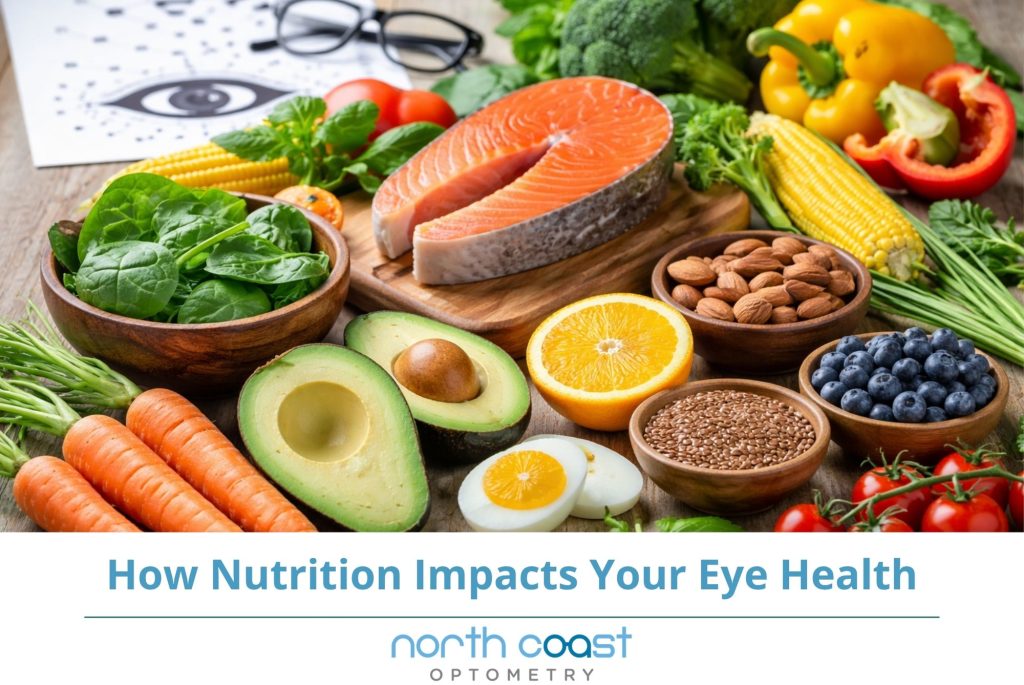
Your eyes rely on a steady supply of vitamins, minerals, and antioxidants to function at their best. While regular eye exams are essential for protecting vision, nutrition also plays a major role in supporting long-term eye health. The foods you eat can help maintain healthy retinal function, support tear production, and reduce oxidative stress that may contribute to certain vision problems over time.
At North Coast Optometry, we believe that healthy habits and preventive care go hand in hand. Understanding how nutrition affects your eyes can help you make choices that support clearer, more comfortable vision every day.
Why Nutrition Matters for Eye Health
Your eyes are highly active organs that depend on proper nourishment. Certain nutrients help protect delicate eye structures from damage caused by aging, sunlight exposure, and environmental stressors. A balanced diet may also support circulation, which is important for delivering oxygen and nutrients to the eyes.
Good nutrition can contribute to:
- Healthy retinal function
- Reduced oxidative stress
- Better tear quality and eye comfort
- Support for night vision
- Overall wellness that benefits your eyes and body
While nutrition alone cannot replace professional eye care, it can be an important part of maintaining healthy vision throughout life.
Key Nutrients That Support Healthy Eyes
Vitamin A
Vitamin A is essential for good vision, especially in low-light conditions. It supports the retina and helps maintain the surface of the eye. A lack of vitamin A may contribute to dryness and difficulty seeing at night.
Common food sources include:
- Carrots
- Sweet potatoes
- Spinach
- Kale
- Eggs
- Liver
Lutein and Zeaxanthin
These antioxidants are found in high concentrations in the retina and may help protect the eyes from oxidative damage and light-related stress. They are often associated with support for long-term macular health.
Common food sources include:
- Leafy greens such as spinach and kale
- Broccoli
- Peas
- Corn
- Eggs
Vitamin C
Vitamin C is an antioxidant that helps support healthy blood vessels in the eyes and contributes to overall tissue health.
Common food sources include:
- Oranges
- Strawberries
- Bell peppers
- Kiwi
- Tomatoes
Vitamin E
Vitamin E helps protect cells from oxidative stress and works alongside other antioxidants to support eye health.
Common food sources include:
- Almonds
- Sunflower seeds
- Hazelnuts
- Avocados
Omega-3 Fatty Acids
Omega-3s are important for retinal health and may also support tear production, making them especially helpful for some people with dry eye symptoms.
Common food sources include:
- Salmon
- Sardines
- Tuna
- Flaxseeds
- Chia seeds
- Walnuts
Zinc
Zinc helps transport vitamin A from the liver to the retina and plays a role in overall eye function.
Common food sources include:
- Beans
- Nuts
- Shellfish
- Lean meats
- Whole grains
Foods That May Benefit Your Vision
A nutrient-rich diet for eye health does not have to be complicated. In many cases, eating a colorful variety of whole foods can help you get many of the nutrients your eyes need.
Consider incorporating:
- Dark leafy greens
- Bright orange vegetables
- Citrus fruits
- Berries
- Fish rich in omega-3s
- Nuts and seeds
- Eggs
- Beans and legumes
Meals built around these foods can support both vision and overall wellness.
Nutrition and Common Eye Concerns
Dry Eye
Some people with dry eye symptoms may benefit from a diet that includes omega-3 fatty acids and proper hydration. Nutrition can support tear quality, but dry eye often has multiple causes, including screen use, environment, and certain health conditions.
Aging Eyes
As we age, the eyes experience natural changes. Antioxidants such as lutein, zeaxanthin, vitamins C and E, and zinc may help support eye health as part of an overall healthy lifestyle.
Children’s Eye Health
Kids also benefit from balanced nutrition. Nutrients that support eye development and function are important during childhood, especially as children spend more time reading and using digital devices.
Healthy Habits That Work Alongside Good Nutrition
Nutrition is most effective when combined with other healthy habits. To help protect your eyes:
- Schedule routine comprehensive eye exams
- Wear UV-protective sunglasses outdoors
- Stay hydrated
- Take breaks during long periods of screen use
- Manage chronic health conditions such as diabetes or high blood pressure
- Avoid smoking
These steps can help support both eye comfort and long-term visual health.
When to Schedule an Eye Exam
Even with a healthy diet, it is still important to have your eyes examined regularly. Some eye conditions develop gradually and may not cause obvious symptoms at first. Routine eye exams can help detect changes early and keep your vision on track.
If you are experiencing blurry vision, eye strain, dryness, headaches, or changes in night vision, a comprehensive eye exam is a smart next step.
Comprehensive Q&A About Nutrition and Eye Health
Can nutrition really affect eye health?
Yes. Nutrition can support the structures and functions of the eye by providing vitamins, minerals, and antioxidants that help protect eye tissue and maintain normal visual function.
What vitamins are best for eye health?
Some of the most important nutrients for eye health include vitamin A, vitamin C, vitamin E, zinc, lutein, zeaxanthin, and omega-3 fatty acids.
What foods are good for eyesight?
Foods often associated with eye health include carrots, spinach, kale, sweet potatoes, salmon, eggs, berries, citrus fruits, nuts, and seeds.
Can diet improve blurry vision?
Diet alone does not usually correct blurry vision caused by refractive errors such as nearsightedness, farsightedness, or astigmatism. However, healthy nutrition can support overall eye function and long-term ocular health.
Do carrots really help your eyes?
Carrots contain beta-carotene, which the body converts into vitamin A. Vitamin A is important for eye health, particularly for supporting vision in low-light conditions.
Are supplements necessary for healthy eyes?
Not everyone needs supplements. Many people can get the nutrients they need through a balanced diet. It is best to speak with your eye doctor or primary care provider before starting any supplement regimen.
Can omega-3s help with dry eyes?
Omega-3 fatty acids may support tear function and eye comfort for some individuals. Since dry eye can have many causes, a professional evaluation is the best way to determine appropriate treatment.
Is hydration important for eye health?
Yes. Staying hydrated supports overall body function, including tear production, which is important for keeping the eyes comfortable.
Can poor nutrition damage vision?
Over time, poor nutrition may affect overall health in ways that can also impact the eyes. Inadequate intake of important nutrients may contribute to eye discomfort or reduced support for normal visual function.
Are eye-healthy foods important for children too?
Absolutely. Children need proper nutrition to support healthy growth and development, including normal visual development.
How often should I have my eyes checked?
The right schedule depends on your age, health history, vision needs, and risk factors. Regular comprehensive eye exams are the best way to monitor your eye health and vision.
Can an eye doctor tell if my overall health is affecting my eyes?
Yes. During a comprehensive eye exam, your optometrist may detect signs related to certain systemic health conditions that can affect the eyes and vision.
Support Your Eye Health With Regular Vision Care
Nutrition is an important part of protecting your eyes, but it works best alongside regular preventive care. Eating a balanced diet, staying hydrated, and scheduling routine eye exams can help you maintain healthy vision at every stage of life.
If you have questions about your eye health, vision changes, or the benefits of routine eye exams, North Coast Optometry is here to help.
Contact Information
North Coast Optometry
📍 3915 Mission Ave #2, Oceanside, CA 92057
📞 (760) 757-8771
🌐 Website: northcoastoptometry.com
🗓 CLICK HERE To Request An Appointment
