
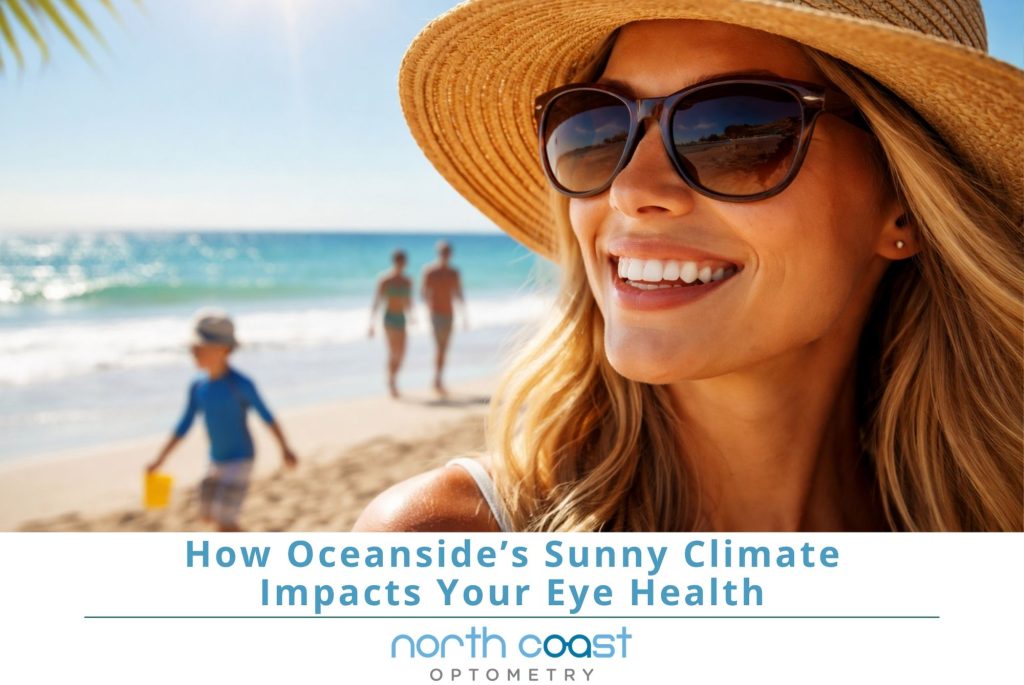
Living in Oceanside means enjoying beautiful sunshine, coastal breezes, and plenty of time outdoors. While the area’s climate is one of its biggest perks, it can also create challenges for your eyes. Prolonged sun exposure, dry air, wind, and glare can all affect eye comfort and long-term eye health if you are not taking the right precautions.
At North Coast Optometry, we believe patient education is an important part of protecting your vision. Understanding how Oceanside’s sunny climate impacts your eyes can help you take simple steps to keep them healthy year-round.
Why Sunny Weather Can Be Hard on Your Eyes
Sunshine may feel great, but your eyes need protection from the same ultraviolet rays that can damage your skin. In a coastal city like Oceanside, UV exposure can be especially intense because sunlight reflects off surfaces like sand, pavement, and water. This means your eyes may get more exposure than you realize, even on mild or breezy days.
Over time, too much UV exposure may increase the risk of several eye conditions, including cataracts, growths on the eye such as pinguecula and pterygium, and damage to the delicate tissues around the eyes. Bright sunlight can also cause short-term discomfort, including squinting, eye fatigue, and light sensitivity.
Dry Air, Wind, and Irritation
Oceanside’s climate is not just sunny. It can also be dry and windy, especially near the coast. Wind and dry air can cause tears to evaporate more quickly, which may leave your eyes feeling irritated, gritty, red, or watery. This is especially common for people who already struggle with dry eye symptoms.
If you spend time outside, drive with the windows down, or sit in air-conditioned environments after being in the sun, your eyes may become even more uncomfortable. Contact lens wearers often notice this first, since lenses can sometimes make dryness feel worse.
Glare Can Strain Your Eyes
Strong sunlight and reflective surfaces create glare that can make it harder to see clearly and comfortably. Oceanside drivers, beachgoers, athletes, and anyone spending time outdoors may notice more eye strain because of this. Glare can contribute to headaches, squinting, blurred vision, and general visual fatigue.
Polarized sunglasses can be especially helpful because they reduce reflected glare from flat surfaces like roads and water. This can make outdoor activities more comfortable while helping you see more clearly.
Children and UV Exposure
Children often spend more time outdoors than adults, which means they may receive significant sun exposure from a young age. Since UV damage can build over time, it is important to start healthy habits early. Sunglasses with UV protection and wide-brimmed hats can help protect children’s eyes during sports, beach days, recess, and everyday play.
Regular pediatric eye exams are also important to monitor vision development and make sure children are seeing clearly both inside and outside the classroom.
How to Protect Your Eyes in Oceanside
Protecting your eyes in sunny weather does not have to be complicated. A few everyday habits can make a big difference:
- Wear sunglasses that block 100% of UVA and UVB rays
- Choose polarized lenses for better glare reduction
- Wear a wide-brimmed hat when spending extended time outdoors
- Use lubricating eye drops if you experience dryness
- Stay hydrated throughout the day
- Avoid rubbing irritated eyes
- Schedule regular eye exams to monitor your eye health
Prescription sunglasses are also a smart option for people who need vision correction and want clear, comfortable outdoor vision.
When to Schedule an Eye Exam
It is a good idea to schedule an eye exam if you experience frequent dryness, redness, light sensitivity, blurry vision, headaches, or ongoing eye fatigue. Even if you are not noticing symptoms, routine eye exams can help detect early signs of sun-related eye damage and other vision problems before they become more serious.
At North Coast Optometry, we are here to help patients in Oceanside protect their vision in every season. Whether you need an annual eye exam, dry eye support, or updated sunglasses, our team can help you find solutions tailored to your lifestyle.
Comprehensive Q&A Section
How does Oceanside’s sunny climate affect eye health?
Oceanside’s sunny climate can increase exposure to UV rays, glare, wind, and dry air. These factors may contribute to eye strain, dryness, irritation, and long-term risks such as cataracts or sun-related eye surface changes.
Can UV rays really damage your eyes?
Yes. Over time, too much UV exposure can harm different parts of the eye and may increase the risk of certain eye conditions. That is why quality sunglasses with full UV protection are so important.
Why do my eyes feel dry after being outside?
Sun, wind, and dry air can cause your natural tears to evaporate more quickly. This often leads to burning, redness, watering, or a gritty sensation.
Are sunglasses enough to protect my eyes?
Sunglasses are one of the best defenses, especially when they block 100% of UVA and UVB rays. For even better protection, pair them with a wide-brimmed hat and avoid prolonged exposure during the brightest parts of the day.
What type of sunglasses are best?
Look for sunglasses labeled 100% UV protection. Polarized lenses are also a great choice because they reduce glare, which can improve comfort and clarity during driving, beach outings, and other outdoor activities.
Can sunny weather make contact lenses uncomfortable?
Yes. Dry air and wind can make contact lenses feel less comfortable by increasing dryness and irritation. Lubricating drops and proper lens care may help, but an eye doctor can recommend the best solution if symptoms continue.
Are children’s eyes at risk from sun exposure too?
Absolutely. Children can accumulate a lot of UV exposure because they often spend more time outside. Sunglasses and hats are helpful for protecting their eyes from an early age.
What are signs that I should see an eye doctor?
You should schedule an exam if you notice blurred vision, dry eyes, redness, light sensitivity, headaches, eye fatigue, or any changes in your vision. Regular exams are also important even without symptoms.
Can an eye exam detect sun-related eye damage?
Yes. A comprehensive eye exam can help identify early signs of UV-related changes and other eye health issues. Early detection allows for better long-term care and treatment.
How often should I get my eyes checked?
Many patients benefit from annual eye exams, but the right schedule depends on your age, vision needs, symptoms, and overall eye health. Your optometrist can recommend the best exam frequency for you.
Contact Information
North Coast Optometry
📍 3915 Mission Ave #2, Oceanside, CA 92057
📞 (760) 757-8771
🌐 Website: northcoastoptometry.com
🗓 CLICK HERE To Request An Appointment
