
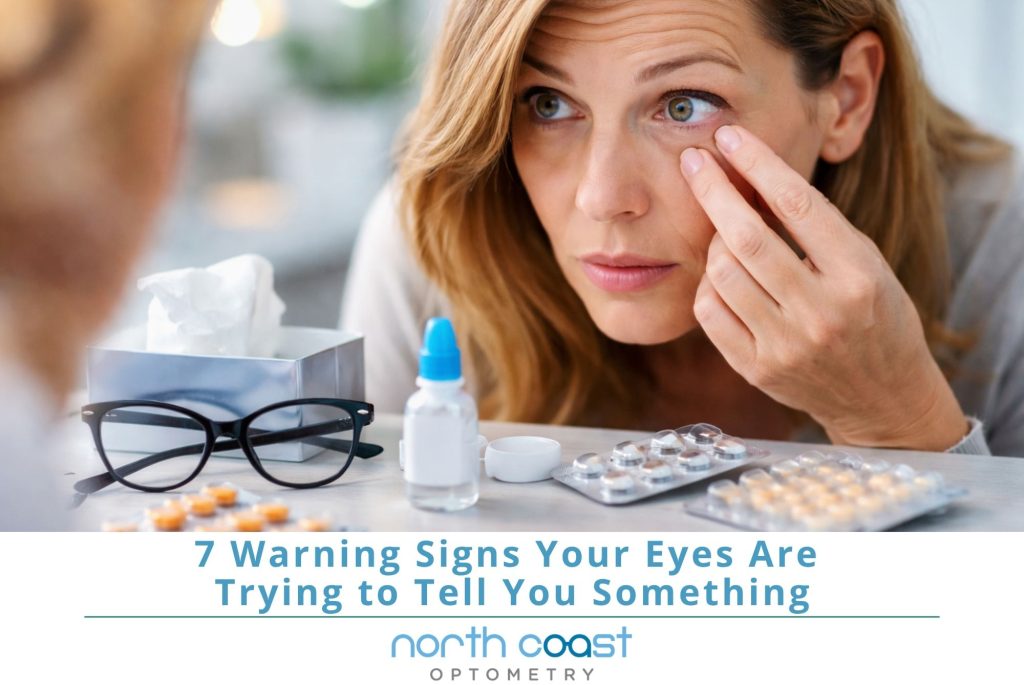
Your eyes do more than help you see clearly. They can also reveal early signs of health issues that should not be ignored. While some changes in vision may seem minor at first, they can point to underlying eye conditions or broader medical concerns that need prompt attention.
At North Coast Optometry, we help patients in Oceanside protect their vision through comprehensive eye exams, early detection, and personalized care. Knowing what warning signs to watch for can help you take action before a small issue becomes a bigger problem.
1. Sudden Blurry Vision
Blurry vision that comes on suddenly should never be dismissed. It may affect one eye or both and can interfere with reading, driving, or recognizing faces.
Possible causes include:
- Refractive changes
- Dry eye
- Eye infection
- Cataracts
- Glaucoma
- Retinal problems
- Blood sugar fluctuations
If your vision becomes blurry without explanation, it is important to schedule an eye exam as soon as possible.
2. Frequent Headaches or Eye Strain
Occasional headaches can happen for many reasons, but recurring headaches along with eye fatigue may suggest a vision problem. If your eyes feel tired after screen time, reading, or focusing on detailed tasks, your prescription may need updating or your eyes may be struggling to work together efficiently.
Common causes include:
- Uncorrected nearsightedness or farsightedness
- Astigmatism
- Digital eye strain
- Binocular vision issues
A comprehensive eye exam can help determine whether your headaches are related to your eyes.
3. Flashes of Light or New Floaters
Seeing occasional floaters is common, especially with age. However, a sudden increase in floaters, flashes of light, or a shadow in your peripheral vision may be a sign of a retinal tear or retinal detachment.
These symptoms require immediate attention. Early diagnosis can make a major difference in preserving sight.
4. Red, Irritated, or Painful Eyes
Red eyes are not always caused by lack of sleep or mild irritation. Persistent redness, discomfort, swelling, or pain may indicate:
- Dry eye syndrome
- Allergies
- Conjunctivitis
- Corneal injury
- Infection
- Inflammation
Eye pain in particular should not be ignored. If your eye is red and painful, especially with light sensitivity or blurred vision, seek care promptly.
5. Trouble Seeing at Night
Difficulty seeing clearly in low-light conditions can affect your safety and confidence, especially while driving at night. This symptom may be linked to:
- Cataracts
- Uncorrected vision changes
- Vitamin deficiencies
- Retinal conditions
If you notice halos around lights, increased glare, or worsening night vision, an eye exam can help identify the cause.
6. Dry Eyes That Do Not Go Away
Dry, burning, gritty, or watery eyes can make everyday life uncomfortable. Chronic dry eye is common, but that does not mean it should be ignored. Ongoing dryness may stem from:
- Meibomian gland dysfunction
- Screen overuse
- Aging
- Environmental factors
- Medications
- Underlying health conditions
Relief starts with identifying the source of the problem and creating a treatment plan tailored to your needs.
7. Double Vision or Sudden Vision Loss
Double vision or any sudden loss of vision is always a serious symptom. These issues can signal a significant eye condition or even a medical emergency.
Possible causes include:
- Nerve issues
- Corneal irregularities
- Cataracts
- Retinal disease
- Stroke-related complications
If you suddenly lose vision or begin seeing double, seek immediate medical attention.
Why Early Detection Matters
Many eye diseases develop gradually and may not cause obvious symptoms in the early stages. Conditions like glaucoma, diabetic eye disease, and macular degeneration can damage vision before you realize anything is wrong.
Routine eye exams help detect problems early, protect long-term eye health, and keep your prescription up to date. Even if your vision seems fine, preventive care is one of the best ways to safeguard your sight.
When to Schedule an Eye Exam
You should schedule an eye exam if you are experiencing:
- Sudden or ongoing blurry vision
- Eye pain or redness
- Flashes, floaters, or shadows in your vision
- Frequent headaches
- Dry or irritated eyes
- Trouble seeing at night
- Double vision or vision loss
If something about your vision feels off, it is worth getting checked.
Comprehensive Q&A: 7 Warning Signs Your Eyes Are Trying to Tell You Something
Q: What are the most common warning signs of an eye problem?
A: Common warning signs include blurry vision, eye strain, flashes or floaters, redness, pain, trouble seeing at night, dry eyes, double vision, and sudden vision loss. Any persistent or sudden change in vision should be evaluated by an optometrist.
Q: Is blurry vision always a sign that I need glasses?
A: Not always. Blurry vision can be caused by a need for updated prescription lenses, but it may also be related to dry eye, cataracts, glaucoma, retinal issues, or health conditions like diabetes.
Q: Are eye floaters dangerous?
A: Some floaters are normal, especially with age. However, a sudden increase in floaters, especially when combined with flashes of light or a dark curtain-like shadow, may indicate a retinal tear or detachment and should be examined right away.
Q: Why do my eyes feel tired after using a computer?
A: Extended screen use can lead to digital eye strain. Symptoms often include dry eyes, blurred vision, headaches, and fatigue. An updated prescription, screen breaks, and proper lighting can help reduce discomfort.
Q: When is eye redness a serious issue?
A: Eye redness may be caused by allergies or irritation, but if it is persistent or comes with pain, discharge, blurred vision, or light sensitivity, it may indicate infection or inflammation that requires prompt care.
Q: Can headaches be related to vision problems?
A: Yes. Uncorrected refractive errors, focusing issues, and eye strain can contribute to headaches. A comprehensive eye exam can determine whether your symptoms are vision-related.
Q: Why is night vision getting worse?
A: Poor night vision can be associated with cataracts, retinal problems, uncorrected refractive errors, or other eye health issues. An eye exam can help identify the cause and appropriate treatment.
Q: Are dry eyes something to worry about?
A: Chronic dry eyes should not be ignored. Persistent dryness, burning, or watery eyes can affect comfort and quality of life and may point to an underlying condition that can be treated.
Q: What causes double vision?
A: Double vision can result from several causes, including eye muscle imbalance, corneal issues, cataracts, nerve-related concerns, or other health problems. Because it can be serious, it should be evaluated promptly.
Q: Is sudden vision loss an emergency?
A: Yes. Sudden vision loss is a medical emergency and should be addressed immediately. Quick action may help protect your eyesight and identify the underlying cause.
Q: How often should I have my eyes checked?
A: The right schedule depends on your age, overall health, risk factors, and whether you wear corrective lenses. Regular eye exams are important even if you are not currently noticing symptoms.
Q: Can an eye exam reveal other health issues?
A: Yes. Eye exams can sometimes detect signs of systemic health conditions such as diabetes, high blood pressure, autoimmune disorders, and other concerns.
Q: What should I do if I notice one of these warning signs?
A: Do not wait to see if the problem goes away on its own. Schedule an eye exam with your optometrist so the issue can be properly evaluated and treated if needed.
Protect Your Vision With Help From North Coast Optometry
Changes in your eyes or vision are often your body’s way of telling you something important. Paying attention to these warning signs can help you protect your sight and overall health.
If you are experiencing blurry vision, eye discomfort, flashes, floaters, headaches, or other concerning symptoms, the team at North Coast Optometry is here to help with thorough evaluations and personalized care.
Contact Information
North Coast Optometry
📍 3915 Mission Ave #2, Oceanside, CA 92057
📞 (760) 757-8771
🌐 Website: northcoastoptometry.com
🗓 CLICK HERE To Request An Appointment
