
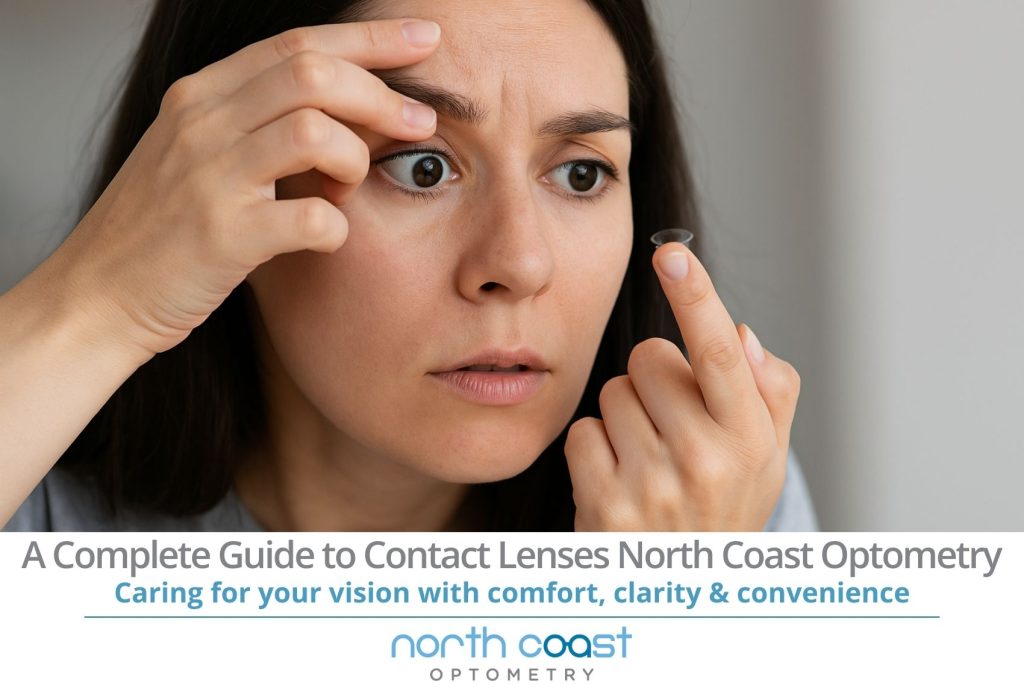
For millions of people, contact lenses offer a flexible, comfortable alternative to eyeglasses. Whether you’re new to contacts or considering upgrading your current pair, understanding your options can help you make the right decision for your eyes and lifestyle. At North Coast Optometry, we specialize in personalized contact lens fittings for patients of all ages, ensuring maximum comfort and optimal vision.
In this comprehensive guide, we’ll break down the types of contact lenses, their benefits, how to care for them, and what to expect during a contact lens exam.
Why Choose Contact Lenses?
Contact lenses provide many advantages, including:
- Clear, Natural Vision
Contacts sit directly on the eye, giving you a wider field of view with no frame obstruction—perfect for sports, driving, and daily activities. - Comfort & Freedom
Modern lenses are designed to be breathable and moisture-rich, keeping your eyes comfortable throughout the day. - Style Flexibility
Enjoy your natural appearance while still having the option of cosmetic or tinted lenses. - Convenience for Active Lifestyles
No slipping, fogging, or constant cleaning like glasses.
Types of Contact Lenses We Offer
1. Soft Contact Lenses
The most popular type, offering exceptional comfort. Options include:
- Daily disposables (fresh pair every day)
- Bi-weekly lenses
- Monthly lenses
- Toric lenses for astigmatism
- Multifocal lenses for presbyopia
Soft lenses are ideal for most patients, especially beginners.
2. Rigid Gas Permeable (RGP) Lenses
These breathable, durable lenses provide crisp, precise vision, especially for:
- High prescriptions
- Astigmatism
- Irregular corneas
They last longer and may be more cost-effective over time.
3. Specialty Contact Lenses
For patients with unique eye conditions, we provide custom solutions such as:
- Scleral lenses for keratoconus or severe dry eye
- Orthokeratology (Ortho-K) for non-surgical nighttime vision correction
- Hybrid lenses combining RGP clarity with soft-lens comfort
What to Expect During a Contact Lens Exam
A standard eye exam is not enough for contact lens wear. A contact lens evaluation includes:
- A Thorough Eye Health Check
We determine if your eyes are suitable for contact lens wear. - Precise Corneal Measurements
Advanced tools measure the shape and curvature of your eye to ensure a perfect fit. - Trial Lenses
You may receive trial lenses to test comfort and clarity before ordering your final pair. - Training for New Wearers
If it’s your first time, we teach you how to insert and remove lenses, proper cleaning techniques, and how to recognize irritation.
Tips for Proper Contact Lens Care
To protect your eye health, follow these guidelines:
- Wash your hands before handling lenses.
- Use only doctor-approved cleaning solutions.
- Never sleep in contacts unless approved for overnight use.
- Replace lenses on schedule—do not extend wear time.
- Avoid water exposure (no showering or swimming in contacts).
Proper care helps prevent infections and ensures long-term comfort.
Comprehensive Q&A on Contact Lenses
Q: How do I know which type of contact lens is best for me?
A: Your eye doctor will evaluate your eye shape, prescription, and lifestyle to determine the best lens type. A specialized fitting ensures comfort and clarity.
Q: Can I sleep in my contact lenses?
A: Only certain lenses are FDA-approved for overnight wear. Sleeping in regular lenses increases infection risk.
Q: Are contact lenses safe for teenagers or children?
A: Yes! Many children and teens wear contacts successfully, especially for sports. Proper hygiene is essential.
Q: What if my eyes feel dry when wearing contacts?
A: We offer moisture-rich and specialty lenses for dry eye. A personalized fitting can greatly improve comfort.
Q: Can I switch brands or types on my own?
A: No. Lens materials and sizes vary. Switching without guidance may cause irritation or reduced vision quality.
Q: Are daily disposable lenses better than monthly lenses?
A: Daily lenses are often the healthiest option, while monthly lenses may be more budget-friendly. Your needs determine the best choice.
Q: Do contact lenses expire?
A: Yes. Both unused lenses and lens solution have expiration dates to ensure safety and effectiveness.
Schedule Your Contact Lens Exam Today
At North Coast Optometry, your comfort and vision are our top priorities. Whether you’re trying contacts for the first time or upgrading your current lenses, our experienced team is here to help you find the perfect fit.
📍 Contact Information
North Coast Optometry
3915 Mission Ave #2
Oceanside, CA 92057
📞 Phone: (760) 757-8771
🌐 Website: https://northcoastoptometry.com/
📅 Request an Appointment: Click Here to Schedule
